When choosing a countertop for your kitchen, two popular materials to consider are granite and Solid Surface. Granite is a natural rock formed underground through geological processes involving high temperatures. On the other hand, Corian® is a manufactured Solid Surface material originally introduced by DuPont and made primarily from acrylic polymers and mineral fillers derived from bauxite.
Both materials have different compositions, properties, advantages, and limitations. As a homeowner investing in a kitchen countertop, you should consider factors such as return on investment, longevity, maintenance, aesthetics, and how well the material complements your space.
At White Surface Studio, we bring you the key factors to consider when choosing between Solid Surface and granite countertops for your home.
Solid Surface vs Granite: 7 Factors to Consider Before Choosing Your Kitchen Countertop
1. Aesthetics: Which Countertop Offers a More Premium Finish?
It is often said that “home is not a place but a feeling.” To create a home that reflects your personality, your interiors should express your individual style. The kitchen is the heart of every home, making the choice of the right kitchen countertop particularly important.
Granite is a natural stone with distinctive colours, patterns, and variations that reflect its natural origin. Some homeowners prefer this natural appearance and the unique character of every granite slab.
Corian® Solid Surface, on the other hand, is available in a wide variety of colours, textures, and finishes, ranging from matte to high-gloss. This versatility makes it easier to coordinate the countertop with your kitchen cabinets, walls, and overall interior design.
Solid Surface also offers a smooth, tactile finish that many people find appealing, making the countertop inviting to touch.
Ultimately, aesthetics depend on individual taste and preference. Some homeowners prefer the natural beauty of granite, while others prefer the refined and contemporary appearance of Solid Surface.
Our verdict: Both materials have their own aesthetic appeal. However, for homeowners seeking a premium, consistent finish with extensive design options, Solid Surface is an excellent choice.
2. Seamless Finish: Solid Surface vs Granite Countertops
One of the most significant differences between granite and Solid Surface countertops is their ability to achieve a seamless appearance.
Granite is a natural stone that cannot be thermoformed into curved shapes. Kitchen countertops made from granite often require multiple slabs or sections, depending on the dimensions and layout of the kitchen. The joints between these sections can remain visible.
Corian® Solid Surface, in contrast, can be joined using specialised fabrication techniques to create inconspicuous seams. Suitable Solid Surface materials can also be thermoformed into various shapes, allowing manufacturers to create curved edges, rounded corners, and customised countertop designs.
Whether you prefer a straight-edged kitchen countertop or a more elaborate curved design, Solid Surface provides greater flexibility in achieving a continuous appearance.
Our verdict: Solid Surface has a clear advantage when it comes to creating seamless kitchen countertops with minimal visible joints and greater design flexibility.
3. Repairability: Which Countertop Is Easier to Repair?
Repairability is an important aspect of countertop durability and long-term value.
Granite is a hard natural stone, but it can chip or crack if subjected to sufficient impact. Depending on the extent of the damage, repairs may be possible, although restoring the original appearance can be challenging. Severe damage may require replacing the affected section, which can involve additional expenses.
Corian® Solid Surface offers an advantage because certain scratches, stains, dents, and other surface imperfections can be addressed through appropriate repair techniques.
Depending on the nature of the damage, sanding, refinishing, or specialised repairs can help restore the countertop’s appearance. After years of use, professional buffing or refinishing may also help refresh the surface.
This repairability can reduce the need for replacement in certain situations and help extend the useful life of a countertop.
Our verdict: Solid Surface has an advantage in repairability because many types of surface damage can be repaired or refinished. Granite can also be repaired in some cases, but the results depend on the severity of the damage.
4. Stain Resistance: Solid Surface vs Granite in Indian Kitchens
Stain resistance is particularly important in Indian kitchens, where spices, oils, sauces, turmeric, and other ingredients are used regularly.
Although granite appears solid, it can be porous. Its resistance to staining depends on the type of stone, its finish, and whether it has been properly sealed. Some granite countertops require periodic sealing to help reduce liquid absorption and staining.
Corian® Solid Surface is non-porous, which means liquids do not readily penetrate the surface. This makes it a practical choice for kitchen countertops that are exposed to everyday spills and food stains.
Many everyday marks on Solid Surface can be cleaned with a damp cloth and mild soapy water, following the manufacturer’s care instructions.
Granite can also be easy to maintain when properly sealed, but acidic substances may damage or dull the surface of certain stones, depending on their mineral composition. This type of surface damage is commonly known as etching.
Solid Surface generally does not require sealing because of its non-porous nature.
Our verdict: Solid Surface offers an advantage in stain resistance and routine maintenance because it is non-porous and does not require periodic sealing.
5. Heat and Water Resistance: Which Countertop Is More Durable?
Heat and water resistance are essential considerations when selecting a kitchen countertop.
Corian® Solid Surface is non-porous and does not readily absorb moisture, making it suitable for kitchen environments where water spills are common.
Granite is generally more resistant to high temperatures than acrylic-based Solid Surface materials. It can tolerate ordinary kitchen heat better, although sudden temperature changes and direct exposure to extreme heat can still cause damage under certain conditions.
Solid Surface has a more limited heat tolerance. Placing a very hot pan directly on the countertop can cause scorching, discolouration, or other damage.
To protect a Solid Surface countertop, homeowners should use heat-resistant trivets, hot pads, and suitable coasters when placing hot utensils on the surface.
If scorching or other surface damage occurs, professional repair or refinishing may be possible, depending on the severity.
However, granite’s porosity means that some varieties require sealing to help protect against staining and liquid absorption.
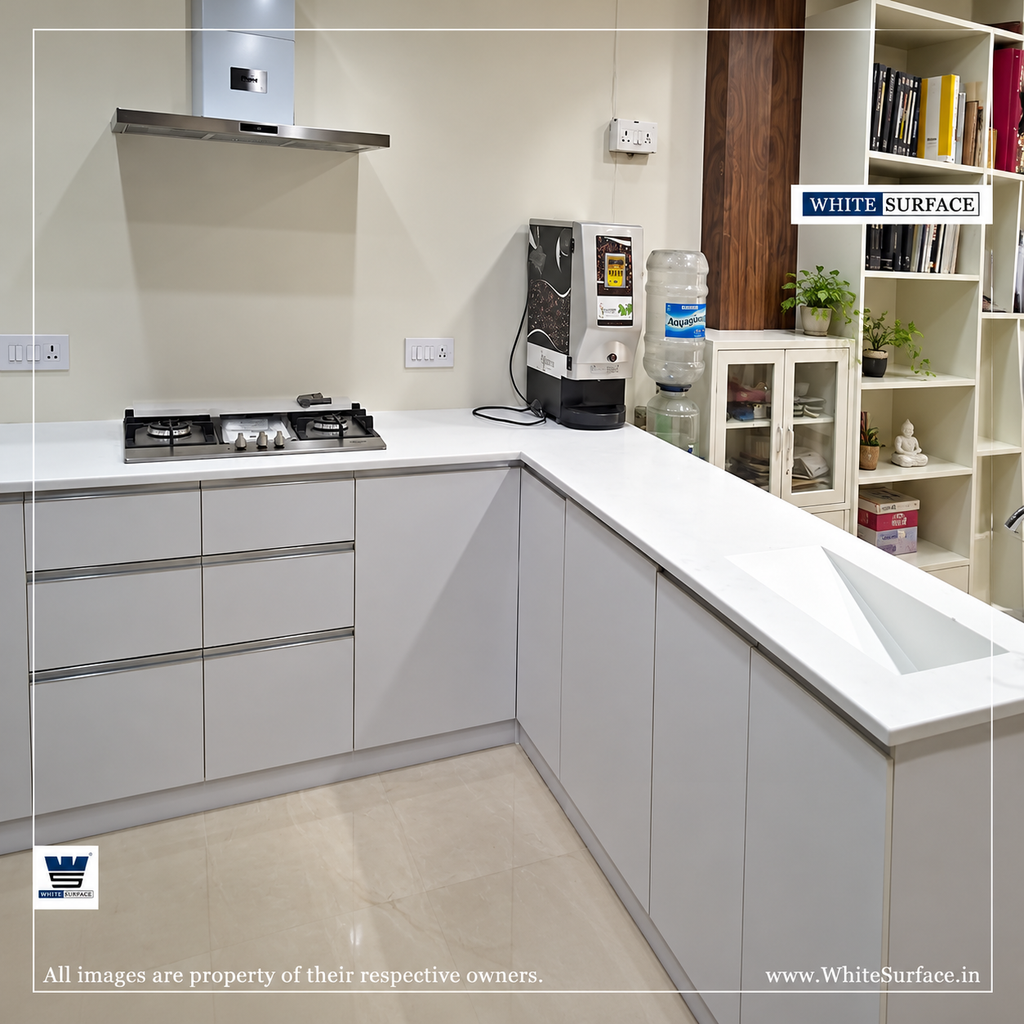
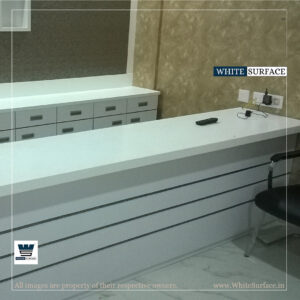
Modern kitchen featuring a customised Solid Surface countertop.Our verdict: Granite has the advantage in heat resistance, while Solid Surface offers the advantage of a non-porous surface and easier routine maintenance. The better option depends on your kitchen habits and priorities.
6. Installation: Choosing the Right Kitchen Countertop Material
The installation process is another important factor when choosing between Solid Surface and granite countertops.
Granite installation requires careful measurement, cutting, transportation, and placement. Because granite slabs are heavy and rigid, accurate fabrication is essential to achieve the required dimensions and fit.
Solid Surface countertops also require precise measurement and professional installation. However, the material can be joined and fabricated to accommodate certain design adjustments, helping create a continuous appearance with minimal visible seams.
Solid Surface installation still requires skilled professionals to ensure appropriate joints, accurate fabrication, proper support, and a high-quality finish.
At White Surface Studio, we understand the importance of professional fabrication and installation when working with Solid Surface materials.
Whether you prefer a matte, semi-gloss, or high-gloss finish, Solid Surface offers a variety of options to complement your kitchen interiors.
Our verdict: Solid Surface offers greater flexibility for customised designs and creating inconspicuous joints. However, both materials require experienced professionals for a successful installation.
7. Lighting Flexibility: Create a Modern Kitchen or Home Bar
Kitchen lighting and illuminated home bar counters have become popular features in contemporary interior design.
Concealed lighting beneath countertops and bar counters can create an attractive ambience, particularly in the evening. These lighting features can add a modern touch and enhance the overall appearance of your interiors.
Certain translucent Solid Surface materials allow light to pass through them, creating opportunities for specialised backlit countertop designs.
Granite is generally opaque and does not offer the same light-transmission properties. However, lighting can still be incorporated around granite countertops using concealed fixtures, illuminated cabinets, and other lighting arrangements.
With Solid Surface, suitable translucent varieties can be used to explore lighting effects that are difficult to achieve with opaque materials.
Why spend money at an outside bar when you can create your own mini bar at home? A carefully designed Solid Surface bar counter can add a sense of luxury while complementing your interior décor.
Our verdict: Solid Surface offers greater flexibility for integrated and backlit countertop designs, making it an attractive option for modern kitchens and home bars.
Solid Surface vs Granite: Our Final Verdict
After comparing granite and Solid Surface across seven important factors, we believe that Solid Surface is an excellent choice for homeowners looking for a premium kitchen countertop with modern aesthetics, seamless design possibilities, and easy maintenance.
Granite offers several advantages, particularly its natural appearance and superior heat resistance. However, depending on the variety selected, it may require periodic sealing and careful maintenance to protect against staining.
Corian® Solid Surface offers a non-porous surface, a wide variety of colours and finishes, repairability, and the flexibility to create customised countertop designs.
For homeowners who value a premium appearance, a hygienic surface, design flexibility, and long-term practicality, Solid Surface is a compelling option.
At White Surface Studio, we specialise in Solid Surface products designed to combine aesthetics and functionality for contemporary interiors.
Whether you are planning a kitchen renovation, designing a modern kitchen countertop, or creating a stylish home bar, we can help you explore Solid Surface solutions suited to your requirements.
Looking for a premium Solid Surface countertop for your home?
Visit White Surface Studio to explore our products and discover how Solid Surface can transform your kitchen interiors.