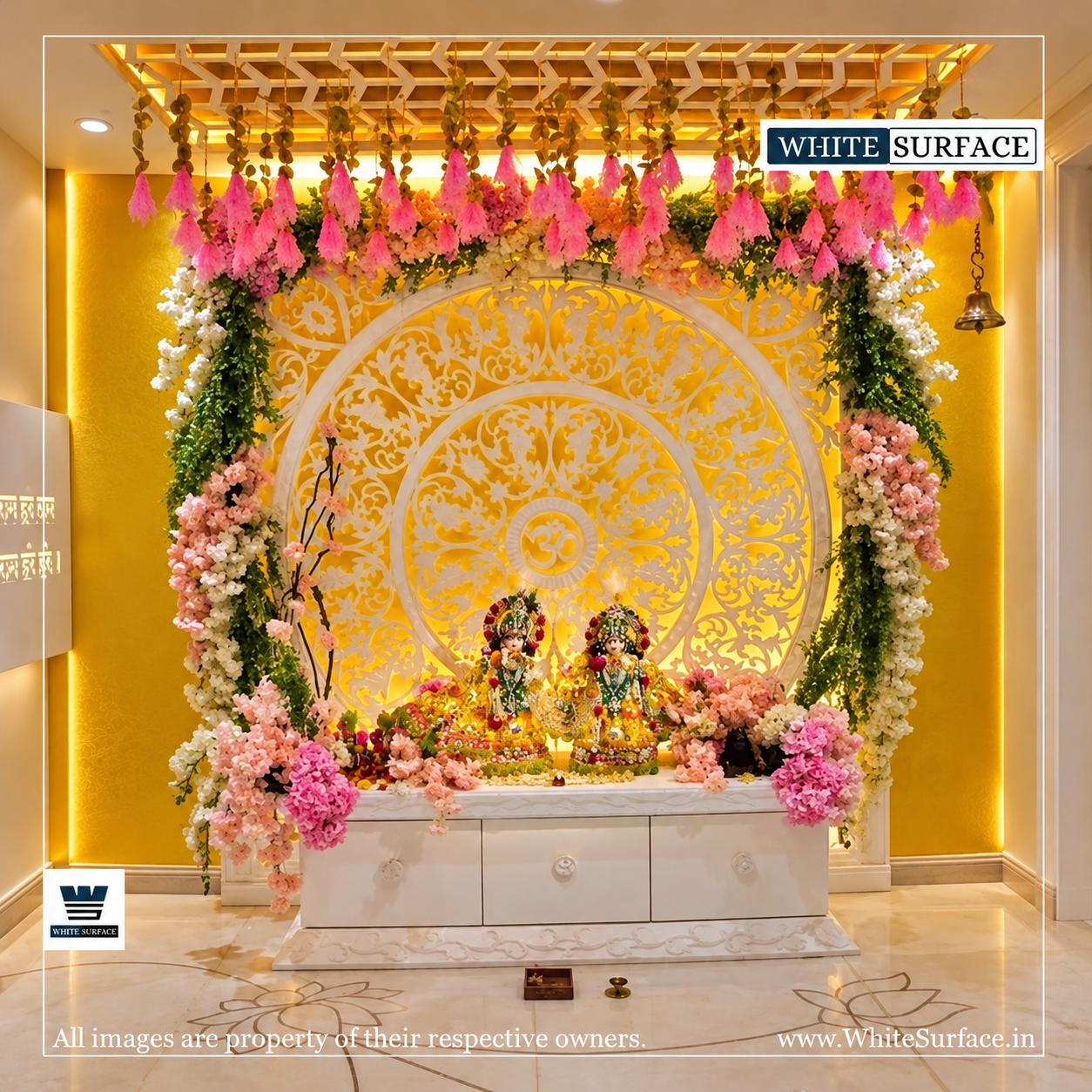
In this guide, White Surface Studio explains the material, design possibilities, maintenance requirements and key factors that influence the price of a custom Corian mandir.
A home mandir is more than a piece of furniture. It is a dedicated space for prayer, reflection and family traditions. As modern homes evolve, homeowners increasingly look for mandir designs that combine traditional aesthetics with contemporary interiors.
But what exactly is a Corian mandir? How is it made, what are its advantages, and how much should you budget for one?
A Corian mandir is one option worth considering. Its smooth finish, customisable design and ability to incorporate intricate patterns and lighting make it suitable for a wide range of homes, from compact apartments to spacious villas.
What Is a Corian Mandir?
A Corian mandir is a home temple fabricated using Corian or a comparable acrylic solid-surface material. It can be designed as a wall-mounted prayer unit, a floor-standing temple or a larger customised installation.
Unlike a conventional wooden mandir or a temple carved from natural stone, a solid-surface mandir can incorporate clean architectural lines, decorative cut-outs, layered panels and integrated illumination.
The result can be traditional, contemporary or a combination of both, depending on the homeowner’s preferences.
An important distinction: Corian® is a specific solid-surface brand. Other manufacturers produce their own solid-surface materials with different specifications. When purchasing a mandir, ask which brand and material grade will be used rather than relying on the word “Corian” alone.
What Is Corian Made Of?
Corian® Solid Surface is an engineered material made primarily from acrylic resin and natural mineral filler, including alumina trihydrate.
According to the manufacturer’s technical documentation, its composition is approximately one-third acrylic resin and two-thirds natural minerals, although exact formulations can vary.
The exact construction should be discussed with the manufacturer before placing an order.
The combination produces a solid, non-porous material designed for architectural and interior applications.
For mandir manufacturing, the material can be cut, shaped, routed and fabricated into decorative panels and components. Depending on the design, a mandir may also incorporate an internal supporting structure, electrical components, LED lighting and storage fittings.
Why Choose a Corian Mandir for Your Home?
1. A Seamless and Refined Appearance
One of the key attractions of a solid-surface mandir is its clean, uniform appearance.
Carefully fabricated joints can be made inconspicuous, helping the finished temple look more cohesive. This is particularly valuable for white mandirs, minimalist interiors and designs with broad, uninterrupted surfaces.
The finish can complement contemporary furniture, marble flooring, wooden panels and a variety of interior colour schemes.
2. Custom Designs and CNC Detailing
A custom mandir should reflect the homeowner’s taste, available space and devotional preferences.
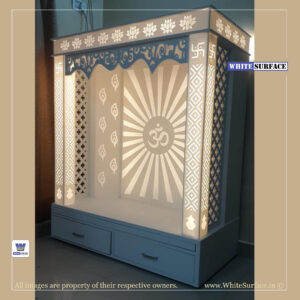
Solid-surface fabrication allows designers to explore different patterns and forms, including:
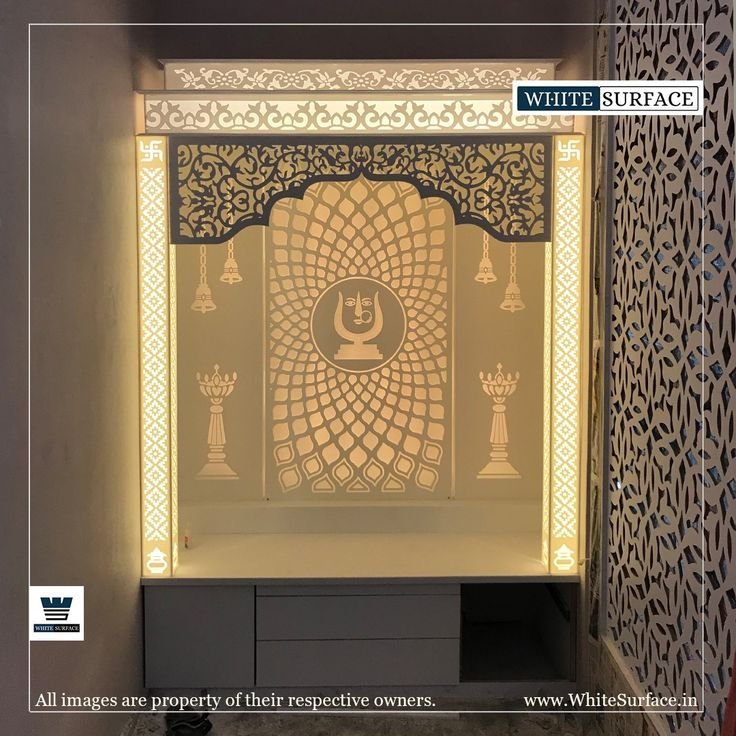
Decorative jaali panels
CNC-cut floral and geometric motifs
Layered pillars and architectural borders
Traditional domes and shikhars
Om, Swastik and other requested religious motifs
Personalised proportions and decorative elements
Computer-controlled cutting helps produce repeatable patterns and accurately shaped components. The final level of detail depends on the material, design, panel thickness and fabrication process.
3. Integrated LED Backlighting
Lighting can change the entire appearance of a mandir.
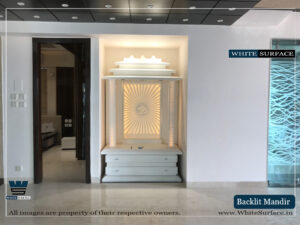
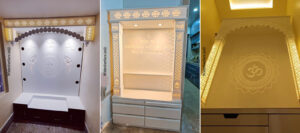
Suitable translucent solid-surface materials can be used with concealed LED lighting to illuminate selected patterns, panels or decorative features.
Warm-white lighting is often chosen for a traditional atmosphere, while neutral lighting may suit contemporary interiors.
A well-planned lighting arrangement should avoid visible hotspots, harsh glare and unnecessary brightness. Access to drivers and electrical components should also be considered during design.
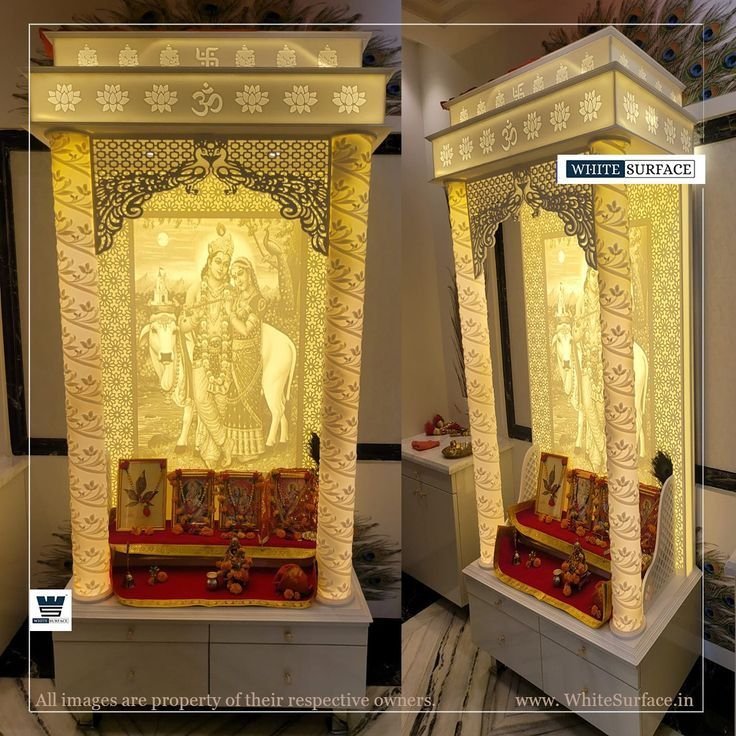
Not every solid-surface colour or grade is equally translucent, so the material should be selected according to the intended lighting effect.
4. A Non-Porous Surface That Is Easier to Maintain
Corian® Solid Surface is non-porous, which makes routine cleaning relatively straightforward.
For a home mandir, this is useful because the area may come into contact with kumkum, sandalwood paste, oil and everyday dust.
Regular cleaning with a soft cloth, water and a suitable mild cleaner can help maintain the surface. Engraved patterns and intricate jaali work may require additional attention because dust can collect in recessed areas.
Avoid assuming that every stain will disappear with a single wipe. Cleaning requirements depend on the substance, how long it remains on the surface and the particular material and finish.
5. Design Flexibility for Different Homes
A custom solid-surface mandir can be planned around the available floor area, wall dimensions and interior layout.
For example:
Compact apartments: A carefully proportioned wall-mounted or compact mandir can make efficient use of space.
Modern family homes: A floor-standing temple can incorporate storage and decorative lighting.
Large residences and villas: A more elaborate installation can include architectural pillars, layered panels and coordinated wall décor.
Contemporary interiors: Minimalist designs can use simple geometry, restrained detailing and clean surfaces.
The best design is not necessarily the largest or most elaborate one. It is the one that fits the home and meets the family’s practical requirements.
Corian Mandir vs Marble Mandir vs Wooden Mandir vs HDF+DUCO
Each material has its own character. The right choice depends on your design preferences, budget, maintenance expectations and installation requirements.
| Feature | Solid-surface mandir | Marble mandir | Wooden mandir | Ply + HDF + Duco paint |
|---|---|---|---|---|
| Overall appearance | Smooth, contemporary and customisable | Natural, traditional and stone-like | Warm, traditional or contemporary | Seamless painted finish (matte/high-gloss); modern and versatile in colors |
| Design possibilities | CNC patterns, layered panels and selected backlit effects | Carving and stone detailing | Carving, joinery and decorative finishes | Intricate CNC routing on HDF, grooved/fluted panels, limitless color palette |
| Surface maintenance | Generally straightforward; recessed details need care | May require material-appropriate cleaning and stain care | Depends on wood, polish and finish | Gentle wiping required; paint can chip or scratch over time; needs care around moisture and oils |
| Weight and handling | Depends on size and construction | Often heavy, depending on stone and dimensions | Depends on wood and construction | Moderate weight; relatively easy to handle, fabricate, and wall-mount |
| Backlighting | Possible with suitable translucent materials | Natural marble is generally opaque | Depends on construction and selected lighting features | Opaque base; requires cutout patterns (jaali) with acrylic/diffusers for backlighting |
Which should you choose?
Compare complete quotations rather than material prices alone. Design complexity, supporting structure, finishing, transport and installation can all influence the final cost.
Choose a solid-surface mandir if you value clean finishes, custom CNC detailing and the possibility of integrated lighting and long life and easy maintenance. Solid Surface(aka Corian) Mandirs are best ROI for long run and a peace of mind when it comes to daily use. Marble may suit you if you prefer the natural character of stone but it does became pale over time because of its porosity, while wood can be ideal for a warm, traditional aesthetic.
What Determines the Price of a Corian Mandir in India?
There is no single price for every Corian mandir. Two temples of similar dimensions can have substantially different costs because their designs and manufacturing requirements may differ.
The main factors include:
1. Size and Overall Configuration
A compact wall-mounted unit generally requires a different amount of material and fabrication work from a large floor-standing temple.
Height, width, depth, storage, design, parts requirements and installation conditions all influence the quotation.
2. Material Brand and Grade
The brand, grade, thickness and colour of the solid-surface sheets can affect the material cost.
Ask your manufacturer to specify the intended material in the quotation. If a particular branded product is promised, request appropriate supporting documentation.
3. CNC Cutting and Three-Dimensional Detailing
Simple engraved patterns and elaborate three-dimensional relief designs involve different levels of programming, cutting, assembly and finishing.
Intricate jaali work, layered pillars, sculpted borders and complex decorative elements can increase fabrication time and cost.
4. Backlighting and Electrical Work
The number of illuminated panels, type of LED components, wiring arrangement and accessibility of electrical fittings can affect the final price.
Discuss the lighting effect you want before the design is finalised rather than treating lighting as an afterthought.
5. Storage and Internal Construction
Drawers, concealed cabinets, supporting structures, access panels and additional fittings may be included depending on the design.
The quotation should clearly state what is included and whether the proposed structure is suitable for the intended installation.
6. Delivery and Installation
Transport, packaging, handling, on-site assembly and installation can vary according to the mandir’s dimensions and destination.
For an accurate quotation, share your approximate dimensions, preferred design, location and any lighting or storage requirements with the manufacturer.
Looking for a Corian mandir price in Kolkata? White Surface Studio can help you explore design options according to your available space, preferred finish and project requirements. Contact the team for a project-specific quotation rather than relying on a generic online price range.
How Long Does a Corian Mandir Last?
The service life of a mandir depends on the quality or the brand of the solid surface material, fabrication, supporting structure, installation and everyday care.
A well-designed solid-surface mandir can remain attractive with appropriate maintenance. However, no responsible manufacturer should promise a fixed lifespan for every installation without considering its construction and conditions of use. A well-constructed mandir can provide many years of service, depending on its materials, construction and care.
Ask about the written warranty, what it covers, exclusions, maintenance requirements and the procedure for obtaining repairs.
Also consider the electrical components separately. LED drivers, wiring and mechanical fittings may have different service requirements from the solid-surface panels.
How to Clean and Maintain a Corian Mandir
A simple maintenance routine can help keep your mandir looking its best.
Remove dust regularly: Use a soft cloth or a suitable gentle cleaning method, especially around engraved patterns.
Clean spills promptly: Wipe away oil, kumkum, sandalwood paste and other residues before they accumulate.
Use appropriate cleaners: Follow the care instructions for the specific material and finish. Avoid harsh chemicals unless expressly approved by the manufacturer.
Protect the surface from direct heat: Use a stable protective plate beneath diyas and other heat-generating items. Do not assume that solid-surface materials are immune to scorching or thermal damage.
Keep lighting accessible: Make sure electrical components can be inspected or serviced safely when necessary.
Arrange professional repairs when needed: Scratches, damaged joints or electrical faults should be assessed by a qualified professional.
For intricate designs, regular light cleaning is often more convenient than allowing dust to build up in the recessed details.
How to Choose the Right Corian Mandir Manufacturer
The appearance of a finished mandir depends on more than its design. Material selection, fabrication precision, assembly and installation all contribute to the result.
Before placing an order, consider these points:
Ask for the material brand and grade to be specified.
Ask for the videos & photos of promised solid surface brands while CNC cutting and before installation.
Review actual completed projects, not only computer-generated designs.
Confirm the dimensions and construction details before production.
Discuss lighting, storage, cleaning access and electrical arrangements.
Request a written quotation with a clear scope of work.
Confirm delivery timelines, installation responsibilities and warranty terms in writing.
An experienced manufacturer should be able to explain the practical trade-offs between different designs and help you select an option that suits your home.
Why Consider White Surface Studio for Your Custom Mandir?
White Surface Studio specializes in custom solid-surface mandirs, CNC-cut detailing and decorative solid-surface applications. White Surface Studio has delivered over 2,500 custom mandirs since 2014.
The design process can be planned around your home’s dimensions, preferred aesthetic and functional requirements, whether you are considering a compact prayer unit or a more elaborate architectural installation.
From the choice of decorative patterns to the planning of backlighting and overall proportions, the objective is to create a mandir that complements your interior while serving its intended purpose.
If you are planning a new home mandir, share your available space, preferred design and approximate budget with White Surface Studio to discuss a suitable solution.
Explore custom mandir possibilities at whitesurface.in, or contact White Surface Studio on WhatsApp at +91 70440 71212 to discuss your requirements.
Frequently Asked Questions
What is a Corian mandir made of?
A Corian mandir uses Dupont Corian® Solid Surface or another specified solid-surface material. The temple may also include a supporting structure, lighting and other fittings, depending on its design.
Is Corian natural stone?
No. Corian® Solid Surface is an engineered material made primarily from acrylic resin and natural mineral filler. It is different from natural marble or granite.
Can a Corian mandir be customised?
Yes. Subject to the selected material and fabrication requirements, a custom mandir can incorporate different dimensions, CNC-cut patterns, decorative panels, selected backlit features and storage.
Can a Corian mandir have LED backlighting?
Yes, when suitable translucent material and an appropriate lighting arrangement are selected. The effect depends on the material grade, thickness, colour and lighting design.
Is a Corian mandir easy to clean?
Its non-porous surface generally makes routine cleaning straightforward. Intricate cut-outs and recessed patterns may need more frequent dusting.
Can a Corian mandir be installed in a small apartment?
Yes. A compact design can be planned around the available space, wall dimensions and installation requirements. The mounting system and supporting structure must be suitable for the actual installation.
How much does a Corian mandir cost?
The price depends on dimensions, material grade, design complexity, CNC detailing, lighting, storage, delivery and installation. Request a quotation based on your specific requirements for an accurate estimate.
Where can I order a custom Corian mandir in Kolkata or different parts of India?
You can contact White Surface Studio through whitesurface.in to discuss your preferred design, dimensions and project requirements.