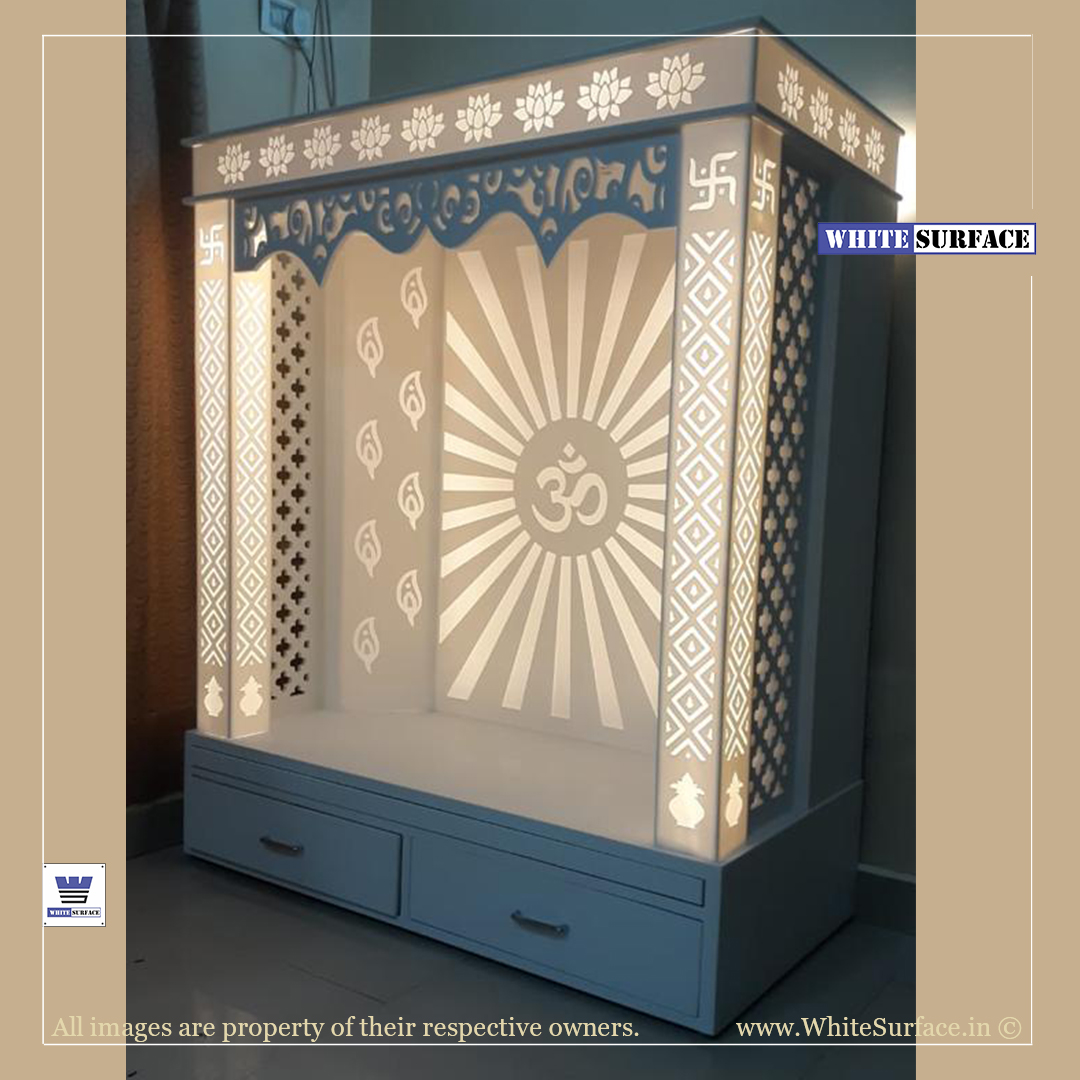
Solid Surface, wood, and marble are three different materials with significantly different compositions, strengths, durability, and costs. When choosing a mandir for your home, understanding the differences between these materials can help you make an informed decision based on your requirements, design preferences, and maintenance expectations.
Solid Surface, including Corian®, is a manufactured material primarily made from acrylic polymers and mineral fillers derived from bauxite. Marble is a natural stone composed mainly of carbonate minerals. It is extracted from nature, treated, shaped, and polished before being installed in homes. Wood is also a naturally occurring material, and its properties vary depending on the type of tree from which it is derived.
Every home is different, but the feeling of spirituality remains the same. A mandir or pooja room, a dedicated space for prayer, is an integral part of many Indian homes. Temples are considered homes for gods and goddesses and should therefore be well-lit and clean. A beautifully designed home mandir also helps devotees concentrate, find peace while chanting mantras, and immerse themselves in meditation.
When selecting a mandir for your home, the key factors to consider include durability, aesthetics, stain resistance, heat resistance, ease of maintenance, and design flexibility.
Solid Surface vs Marble vs Wood: Comparing the Best Materials for Home Mandirs
Here is our take on each of these factors and which material is best suited for different requirements when designing a mandir.
1. Aesthetics: Choosing the Right Mandir Design
Aesthetics depend on personal style, taste, and coordination with the existing elements in your home.
Marble is a natural stone known for its distinctive patterns, cool touch, and elegant finish. Wood offers a natural appearance and a traditional aesthetic. Solid Surface, on the other hand, provides a seamless appearance, consistent finishes, and a wide range of colours and textures.
With Solid Surface, homeowners can explore multiple colour combinations, contemporary finishes, and intricate designs to complement their interiors.
However, each material has its own beauty, and the final choice depends on individual preferences. Our verdict is that Solid Surface, marble, and wood each have their own aesthetic appeal, making the right choice a matter of personal taste and the desired appearance of your home mandir.
2. Seamless Finish: Why Solid Surface Mandirs Stand Out
Among Solid Surface, marble, and wood, Solid Surface stands out for its ability to create a seamless appearance with inconspicuous joints.
Solid Surface is thermoformable, meaning it can be shaped using controlled heat. This property allows manufacturers to create curved surfaces, rounded pillars, decorative arches, and a wide variety of customised mandir designs.
Unlike natural stone or wood, Solid Surface can be joined using specialised techniques to create nearly invisible seams. Its consistent composition also helps maintain a uniform appearance throughout the material.
Marble and wooden mandirs, in comparison, often require multiple pieces to be assembled using adhesives, fasteners, or other joining methods.
Therefore, Solid Surface is an excellent choice for homeowners looking for a seamless, modern, and customised mandir design.
3. Manufacturing Time: Get Your Custom Mandir Faster
One surprising advantage of a Solid Surface mandir is its relatively quick manufacturing time.
Depending on the design, dimensions, detailing, and availability of materials, a Solid Surface mandir can sometimes be manufactured in just a couple of days or even less. A basic marble mandir may take weeks to manufacture, and the same can be true of a wooden mandir, particularly when intricate carving is involved.
At White Surface, we understand the importance of auspicious occasions such as Murat and Griha Pravesh in Hindu traditions. That is why we strive to accommodate urgent requirements and can deliver certain Solid Surface mandirs within 2–3 days, depending on the design and production schedule.
For homeowners working with tight deadlines, a customised Solid Surface mandir from White Surface Studio can be a convenient option.
4. Porosity: Which Mandir Material Is Best for Daily Pooja?
Porosity refers to the presence of tiny spaces within a material that can allow liquids to penetrate its surface.
Solid Surface is non-porous, which means it does not readily absorb liquids. This makes it suitable for mandirs where water, sandalwood paste, and other materials are commonly used during daily pooja rituals.
Wood is comparatively porous and can absorb moisture. Depending on the type of wood, finish, and surrounding conditions, repeated exposure to moisture can cause swelling, warping, or cracking as the material dries.
Marble is generally less porous than many types of wood, but it can still absorb liquids. Appropriate sealing and maintenance may be necessary to help protect its surface.
Therefore, Solid Surface is a practical choice for a home mandir where easy cleaning and resistance to liquid absorption are important considerations.
5. Stain Resistance: Easier Maintenance for Your Home Mandir
Stain resistance is an important consideration when selecting a mandir material because daily Hindu rituals often involve turmeric, sandalwood paste, vermillion (sindoor), and other coloured substances.
Wood and marble can become stained depending on their porosity, surface finish, and maintenance. Marble may require periodic sealing to help reduce staining, while wood can be affected by moisture and coloured substances, particularly when its protective finish is damaged.
Solid Surface, including Corian®, is comparatively easy to clean and maintain. Everyday dirt and many surface marks can be removed using a damp cloth and mild soapy water, following the manufacturer’s care recommendations.
This makes Solid Surface a convenient option for families who perform daily pooja and want to maintain the appearance of their mandir with minimal effort.
For a mandir that is easy to clean after everyday rituals, Solid Surface offers a practical advantage over many untreated or inadequately protected wood and marble surfaces.
6. Design Flexibility: Intricate and Customised Mandir Designs
Mandir designs often incorporate domes, rounded pillars, decorative arches, floral patterns, and intricate engravings. All three materials—Solid Surface, marble, and wood—can be used to create beautiful designs, but their manufacturing requirements differ.
Intricate carving in marble and wood can be time-consuming and may require specialised craftsmanship. The complexity, level of detail, and availability of skilled artisans can also influence the final cost and manufacturing time.
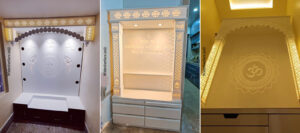
Solid Surface offers considerable design flexibility because of its workability and thermoformable properties. It can be cut, engraved, shaped, and joined to create customised decorative elements and contemporary mandir designs.
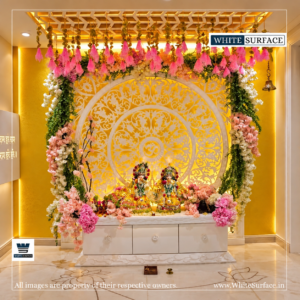
This flexibility allows designers to explore a wide range of possibilities, including elaborate back panels, floral motifs, decorative pillars, and modern architectural details.
For homeowners looking for a customised mandir with intricate detailing and contemporary styling, Solid Surface provides extensive design possibilities.
7. Translucency: The Beauty of Backlit Solid Surface Mandirs
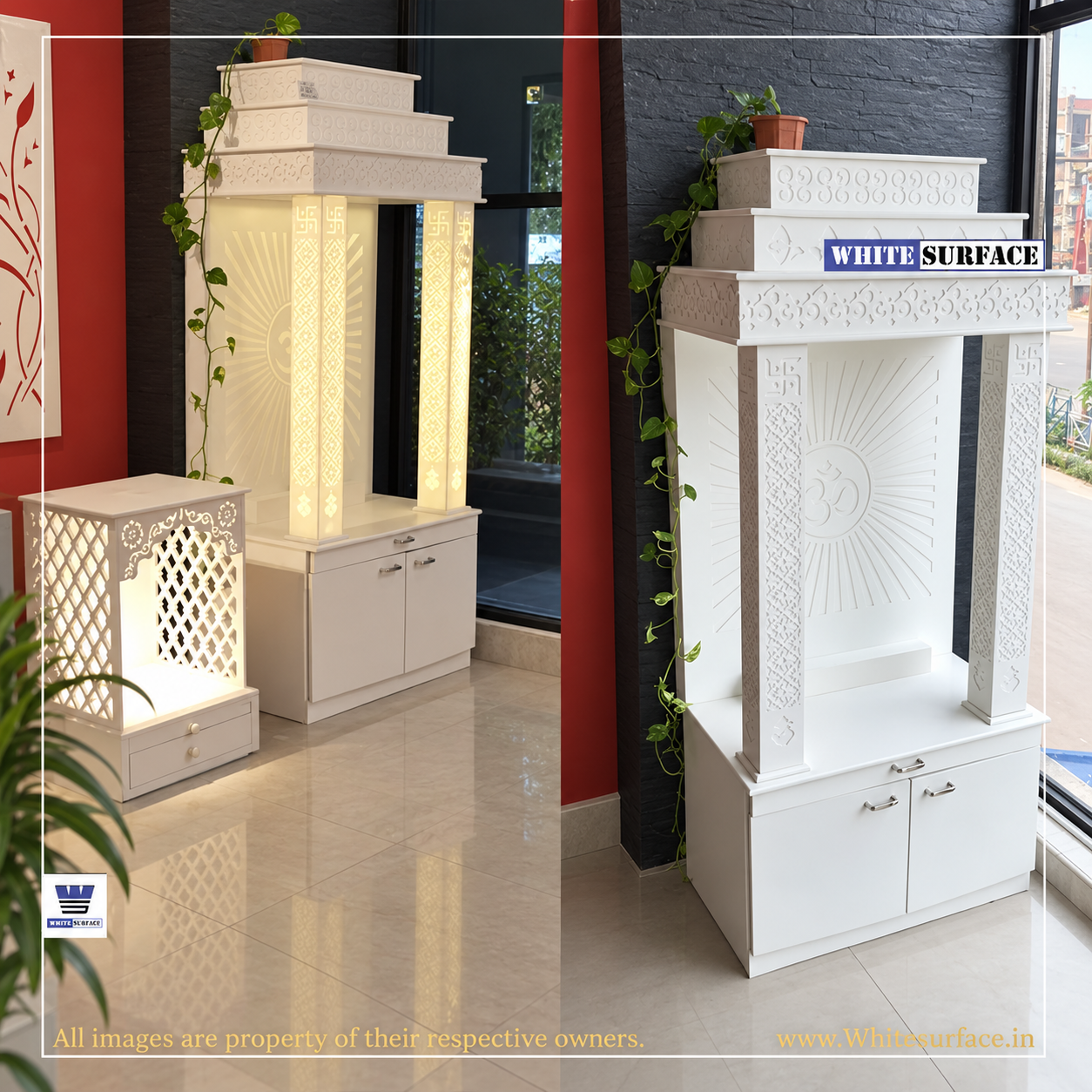
One of the distinctive features of certain Solid Surface materials is their ability to transmit light. Depending on the colour, thickness, composition, and finish, some Solid Surface sheets allow light to pass through them.
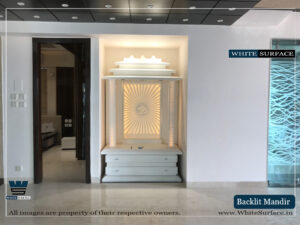
This property makes them particularly suitable for backlit Solid Surface mandirs, where carefully positioned lighting creates a soft, soothing ambience.
Wood and marble are generally opaque and do not transmit light in the same way. However, lighting can still be incorporated into their designs through dedicated niches, concealed fixtures, and decorative openings.
With suitable Solid Surface materials, manufacturers can combine engraving or chiselling with backlighting to highlight selected patterns and decorative details. Depending on the design and material, this can be achieved using sheets such as 6 mm or 12 mm Solid Surface.
The result is a mandir that combines intricate design with carefully diffused illumination.
8. Lighting: Creating a Peaceful and Modern Pooja Room
Lighting plays an important role in the overall appearance and ambience of a home mandir.
Embedded lights beneath edges, concealed lighting around decorative panels, and backlighting behind idols or statement pieces are popular design options for contemporary pooja spaces.
Solid Surface provides considerable flexibility when incorporating lighting because certain varieties transmit light and can create a diffused glow across selected areas of the design.
Marble and wood also offer flexibility for lighting installations. Designers can create niches, recesses, and concealed spaces for LED lights to illuminate the mandir.
However, translucent Solid Surface can offer a distinctive lighting effect that is difficult to achieve with opaque marble or wood alone.
At White Surface Studio, backlit mandir designs combine decorative craftsmanship with lighting to create an elegant focal point for modern Indian homes.
9. Reparability: Which Mandir Material Is Easier to Repair?
The ability to repair a mandir is another important factor to consider, especially when it is used every day.
Solid Surface is a homogeneous material, and certain surface scratches, stains, and minor imperfections can often be addressed through appropriate sanding, refinishing, or other approved repair techniques. Depending on the type and severity of the damage, cracks and chips may also be repaired using suitable methods.
Marble repairs can involve grinding, polishing, filling, and resealing, depending on the damage. These processes may require specialised skills and can be time-consuming.
Wooden mandirs can also be repaired through sanding, refinishing, filling, or replacing damaged components. However, the results depend on the extent of the damage, the type of wood, and the existing finish.
Therefore, Solid Surface offers a practical repair advantage for certain types of surface damage, although the appropriate repair method depends on the material and the nature of the problem.
10. Heat Resistance: Choosing a Safer Material for Pooja Rituals
Heat resistance is particularly important for mandirs because daily rituals may involve diyas, incense sticks, and other sources of heat.
Solid Surface has a limited tolerance for high temperatures. Some products are rated for exposure to temperatures around 212°F (100°C), but the exact heat resistance depends on the product specification. Direct contact with a flame or a hot object can damage the surface.
Marble generally has excellent heat resistance and is less susceptible to damage from ordinary heat exposure than many other decorative materials. However, sudden temperature changes and direct flame exposure can still present risks.
Wood is combustible. Although some hardwoods, including teak and mahogany, may take longer to ignite under certain conditions, wooden mandirs still require care around diyas, incense, and open flames.
Consequently, marble generally has the advantage when heat resistance is the primary consideration. Regardless of the material chosen, diyas and other sources of open flame should be kept at a safe distance from combustible materials, and appropriate fire-safety precautions should always be followed.
Our Verdict: Solid Surface vs Marble vs Wood for Your Home Mandir
After comparing Solid Surface, marble, and wood across different factors, our verdict is that each material has its own advantages and limitations.
However, Solid Surface mandirs from White Surface Studio offer an appealing combination of design flexibility, seamless aesthetics, easy maintenance, repairability, and backlighting possibilities.
Marble is an excellent option for homeowners who prefer natural stone and prioritise heat resistance. However, its maintenance requirements, potential for staining, and limitations in certain intricate designs may need to be considered.
Wood is well suited to traditional interiors and offers a natural, warm appearance. However, depending on its type, finish, and environmental conditions, it may require regular maintenance and protection against moisture, stains, termites, and mould.
Solid Surface, including Corian®, is a modern material that provides extensive opportunities for creating customised mandirs with contemporary finishes, intricate detailing, and backlit designs.
At White Surface Studio, we specialise in designing and manufacturing customised Solid Surface mandirs that combine modern craftsmanship with the spiritual significance of a traditional Indian pooja space.
Whether you are looking for a contemporary backlit mandir, an intricately designed temple, or a customised mandir that complements your home interiors, we can help you explore a design that suits your requirements.
Looking for a customised Solid Surface mandir for your home?
Discover our designs and learn more about White Surface Studio:
- Website: https://whitesurface.in/about-us/
- Google Maps: https://goo.gl/maps/vpdqRSeA4qFeoLu29
Choose a mandir that brings together thoughtful design, everyday practicality, and the spiritual atmosphere your home deserves.